Targets the source
Deep TMS uses a patented H-coil to safely reach broader and deeper brain regions than standard TMS — directly engaging the structures tied to mood, anxiety, and compulsive patterns.
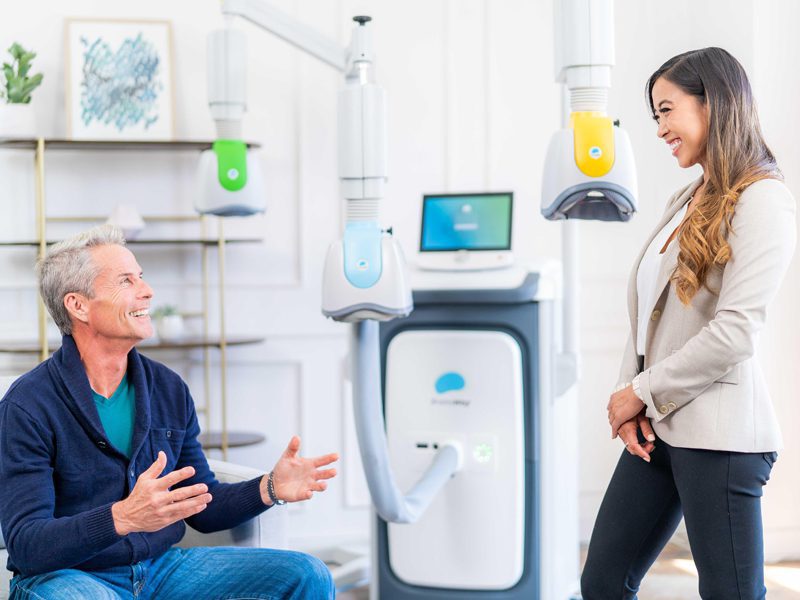
Find lasting relief without the systemic side effects of antidepressants. Deep TMS is a scientifically proven, non-invasive treatment that works with your brain — not against it.
Antidepressants have helped millions, but they are not the right fit for everyone. Over 40% of patients diagnosed with major depression are found to be unresponsive to antidepressant medication. A similar percentage exists for OCD, with 40–50% of patients considered treatment-resistant.
For those who do respond, common side effects — weight gain, sexual dysfunction, insomnia, emotional blunting, and nausea — can erode quality of life and lead to discontinuation. Many patients find themselves cycling through multiple medications and dosages, searching for relief that never quite arrives.
Deep TMS was developed specifically to address these gaps: a non-medication, non-invasive treatment that directly regulates the brain circuits driving depression, anxiety, OCD, and PTSD — without the systemic burden of drugs.
Antidepressants have evolved through multiple generations, yet many patients still struggle with side effects, partial response, or no response at all.
Deep TMS uses a patented H-coil to safely reach broader and deeper brain regions than standard TMS — directly engaging the structures tied to mood, anxiety, and compulsive patterns.
Gentle magnetic pulses rebalance erratic neural firing in areas like the dorsolateral prefrontal cortex and anterior cingulate cortex — restoring healthier brain rhythms without drugs.
Clinical studies show lasting improvement that holds for months after treatment. Deep TMS works with your brain’s own biology rather than artificially altering neurotransmitter levels.
Deep TMS does not cause any significant, long-lasting, or adverse side effects. Its most common side effect is a localized headache at the site of activation, which typically passes on its own after the first few sessions.
Unlike ECT, which can cause severe short-term memory loss and requires full sedation under anesthesia, Deep TMS is performed while you are fully awake and alert. You can drive yourself to and from each session and resume your normal activities immediately afterward.
Seizures are extremely rare — a study of Deep TMS treatments from 2010–2020 observed a rate of 2 in 10,000 patients when properly implemented. This compares favorably to rates of 10–40 per 10,000 patients with common antidepressant medication.
If medication hasn’t delivered the relief you need — or the side effects have become too much — Deep TMS at Chrysalis TMS Institute may be the alternative you’ve been looking for. Speak with our team to learn more.